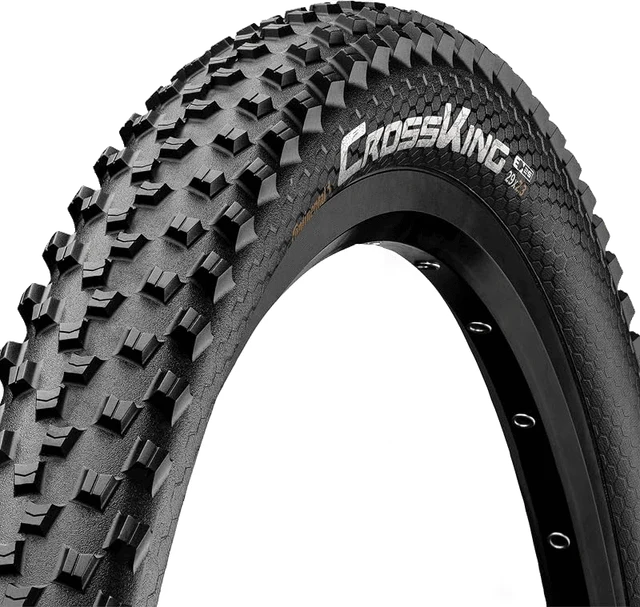
MTB tyres
Kujo Attachi MTB-band 29 x 2,10
The Kujo Attachi is a 29 x 2.10 inch (54-622) MTB tyre with 27 TPI, made for cross-country.
What you get
- Kujo brand, Attachi model
- 29 x 2.10 inch (54-622)
- 27 TPI
Why choose the right MTB tyre?
On a mountain bike the tyre is your first suspension. A wide tyre at low pressure follows the terrain and keeps contact, so you can brake and steer with confidence. Common sizes run from 2.2 to 2.6 inches for cross-country and trail, and 2.4 to 2.8 inches for enduro and harder riding.
The tread decides how the bike behaves off-road. Low, closely spaced knobs roll fast on hard ground. Tall, widely spaced knobs dig into mud and loose sand. Shoulder knobs give grip when cornering. At the rear you usually want a faster-rolling pattern, at the front more grip.
The rubber compound is a trade-off between grip, speed and wear. Softer rubber sticks better to wet rock but wears quicker and rolls slower. The casing construction (light for racing, reinforced for enduro and e-bikes) decides how well the tyre withstands rim strikes and torn sidewalls.
Practically all MTB tyres are run tubeless. With sealant you can use low pressures without a tube pinching, and small leaks seal themselves. The front tyre usually runs a little softer than the rear.
What each type of MTB tyre is for
The pressure is a tubeless starting point for a rider of about 75 kg. Adjust it to the terrain and feel.
| Type | Width | Pressure (approx.) | Rolling speed | Grip and toughness |
|---|---|---|---|---|
| Cross-country | 2.2 to 2.4 in | 1.3 to 1.7 bar | Very fast | Light, less protection |
| Trail | 2.3 to 2.5 in | 1.2 to 1.6 bar | Good | All-round, good balance |
| Enduro | 2.4 to 2.6 in | 1.1 to 1.5 bar | Average | Lots of grip, reinforced |
| Mud and soft ground | 2.3 to 2.5 in | 1.0 to 1.5 bar | Slow on hard ground | Tall knobs, bite deep |
E-bikes and heavier riders need more pressure or a reinforced casing.
Choose it if
- You want a 29 inch cross-country tyre
- You want to compare two Amazon shops
- You ride forest trails, singletrack or bike parks.
- You want more grip in corners, downhill and on wet rock.
Choose something else if
- You need more tread for heavily muddy trails
- You want something wider than 2.10
- You ride mostly on paved roads and cycle paths: a gravel or road tyre rolls much more easily.
- Your bike only has room for a narrow tyre: check the maximum width.
How to choose and use an MTB tyre
Check the size
Read the size on your old tyre, for example 29 x 2.4. The rim diameter (27.5 or 29 inch) must match or it will not fit.
Choose front and rear separately
For more grip at the front and more speed at the back, combine two treads. Mind the rotation arrow on the sidewall.
Fit the tyre tubeless
Fit the tyre, add sealant and inflate hard until both beads pop into place. Spin the wheel afterwards to spread the sealant.
Set the pressure
Start from the table values and drop 0.1 bar at a time until the tyre just stops bottoming out. A digital gauge helps because such low pressures are hard to read.
Good to know
- Check frame and fork clearance for 2.10
- The title is cut off, so check the bead type on the product page
- Check the pressure often: low pressures lose air faster.
- Watch wear on front and rear. Worn knobs lose grip, especially in corners.
- An e-bike or heavier rider needs a reinforced casing against rim strikes.
- Check that the tyre suits your rim width. A rim that is too wide or too narrow distorts the profile.
Also in this category
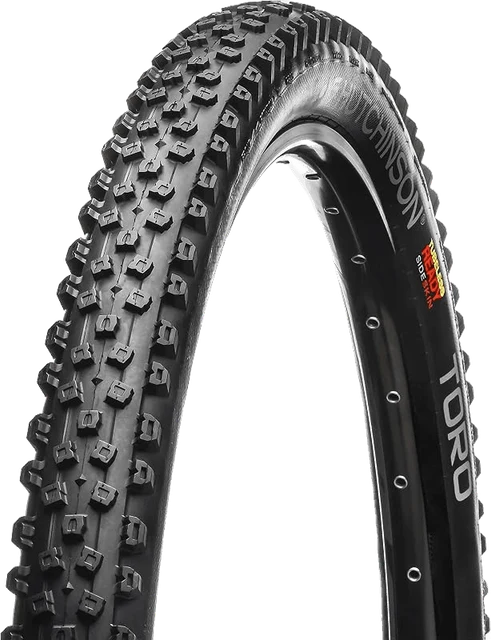
- Hutchinson Toro XC MTB-band1 shop · Amazon.com.be€31.99
- Weerock MTB-band 26/27,5/29 x 2,351 shop · Amazon.nl€43.99
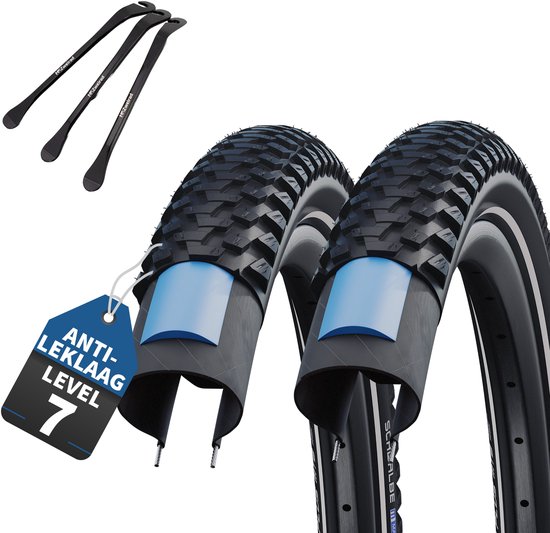
- Schwalbe Marathon Plus MTB-banden 29 x 2,25 (set van 2)1 shop · bol€89.99
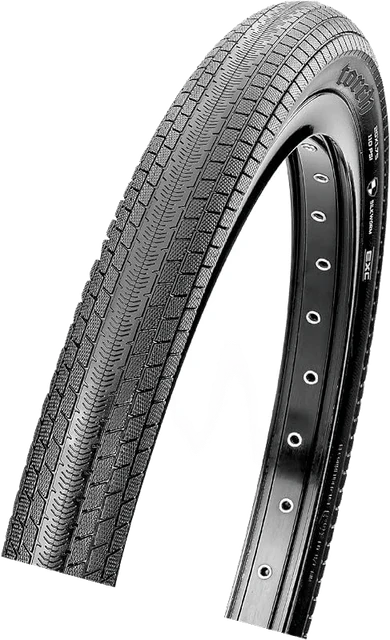
- Maxxis Torch band 29 x 2.101 shop · Amazon.com.be€27.99
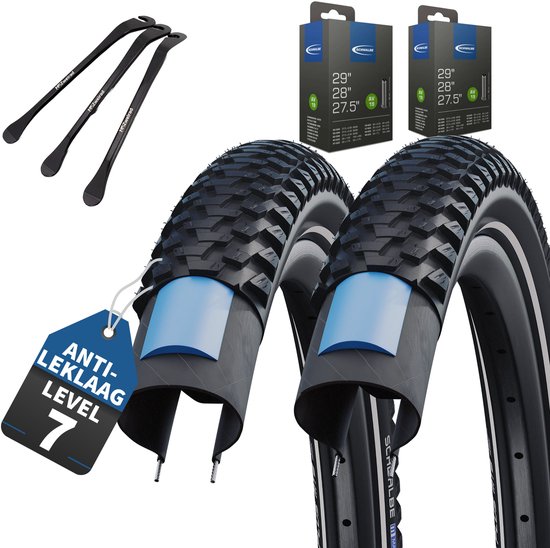
- Schwalbe Marathon Plus MTB-banden 29 x 2,25 (set van 2)1 shop · bol€99.99
- Continental Cross King 2.2 Performance band 29 x 2,21 shop · Amazon.com.be€16.00