Energy gels
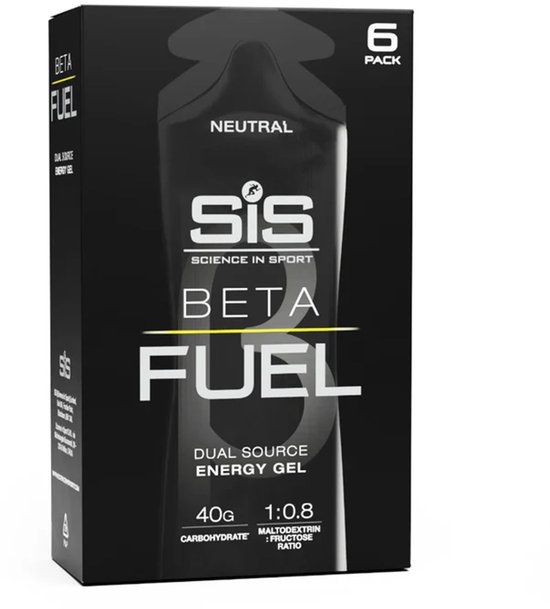
Science in Sport BETA Fuel Dual Source gel neutraal
Science in Sport BETA Fuel Dual Source is an energy gel in a natural flavour. The name points to two carbohydrate sources in one gel, which matters on long efforts.
What you get
- Energy gel by Science in Sport
- Natural flavour
- BETA Fuel Dual Source
Why an energy gel?
A gel is the most compact way to carry carbohydrate. The pouch weighs next to nothing, fits in any pocket and takes one hand and a few seconds. That counts for a lot at high intensity, in a bunch or on a climb.
The carbohydrate is dissolved in a syrup, often maltodextrin with glucose and fructose, so your body absorbs it quickly. A standard gel is concentrated and needs water, roughly 150 to 250 ml with it, or it sits heavily in your stomach. An isotonic gel is more diluted and can be taken without extra water.
Guideline figures: on rides of more than an hour and a half, 30 to 60 g of carbohydrate per hour is common. With gels of 20 to 25 g, that means one gel every 20 to 40 minutes. On rides of three hours or more, trained riders go up to about 90 g an hour, and a glucose and fructose mix helps. You build that up step by step in training.
There is a downside too. The taste is sweet, and after a few gels you may have had enough. Many riders mix gels with a bar or a drink so that flavours and textures change.
Types of energy gel compared
Gels look alike, but concentration and make-up make a difference to your stomach.
| Type | Carbs per gel | Water with it | Suits | Watch for |
|---|---|---|---|---|
| Standard gel (concentrated) | About 20 to 25 g | Yes, roughly 150 to 250 ml | Hard efforts, quick energy | Heavy on the stomach without water |
| Isotonic gel (diluted) | About 20 to 25 g in a bigger pouch | Not strictly needed | If you drink little | Larger, heavier pouch |
| Caffeine gel | 20 to 25 g, plus roughly 25 to 100 mg caffeine | Yes | Second half of a long ride | Count other caffeine, mind your sleep |
| Glucose and fructose gel | About 25 to 40 g | Yes | Rides of three hours or more | Your gut needs to get used to it |
A general guide. Brands and formulas differ, so read the label.
Choose it if
- You ride long and want carbs without a strong fruit flavour
- You want a neutral gel that pairs well with a sports drink
- You ride hard or in a group and have no time to chew.
- You want to carry little weight on a long ride or race.
Choose something else if
- You ride short, easy rides: a gel is often unnecessary there
- You ride for less than an hour. Water is usually enough.
- You dislike very sweet tastes or a syrupy texture.
How to use an energy gel
Get them ready
Put the gels in your jersey pocket before you leave so you can grab one with a single hand. A gel you have to hunt for gets eaten too late.
First gel after 30 to 45 minutes
Do not wait until you feel hungry. After that, take one gel every 30 to 45 minutes, depending on your target of 30 to 60 g an hour.
Wash it down
Take a standard gel with 150 to 250 ml of water, which means several good swallows from your bottle. An isotonic gel can go without.
Pick your moment
Take one on a flat section or just before a climb, when you can breathe and swallow calmly.
Keep the wrapper
Put the empty pouch back in your pocket. Many pouches have a tear strip that stays attached, so squeeze it flat.
Good to know
- Try a gel in training before race day
- Drink water with a gel, especially if you take several
- Without water, a standard gel sits heavily in your stomach. Always drink with it, or choose an isotonic gel.
- Practise with gels before you use them in an event. Your stomach adapts to higher amounts, but it takes time.
- Some gels contain caffeine. Count other sources such as coffee and cola, and mind your sleep.
- These are general guidelines for recreational riders. For personal nutrition advice, or with a medical condition, ask a doctor or sports dietitian.
Also in this category
- Applied Nutrition Isotonic Energy Gel1 shop · Amazon.com.be€12.00
- Science in Sport BETA Fuel Dual Source gel aardbei-limoen (6 x 60 ml)1 shop · Amazon.nl€19.99
- Science in Sport BETA Fuel Dual Source gel1 shop · bol€59.90
- Science in Sport GO Isotonic Energy Gel lemon-lime (6 x 60 ml)1 shop · Amazon.nl€14.99
- Overstim.s Antioxidant energiegel, 10 zakjes1 shop · Amazon.com.be€22.50
- Science in Sport GO Isotonic Energy Gel1 shop · bol€39.90


