Gravel tyres
Gravelband 700 x 40C tubeless ready
A gravel tyre in 700 x 40 that is tubeless ready. Made for gravel rides, with 40 mm width for comfort.
What you get
- Size 700 x 40
- Tubeless ready
- For gravel riding
Why a gravel tyre?
On loose gravel a narrow road tyre slides around and bounces off every stone. A gravel tyre is typically 35 to 50 mm wide, runs lower pressure and moulds itself to the surface. That gives more grip, more control and much more comfort, especially on long rides.
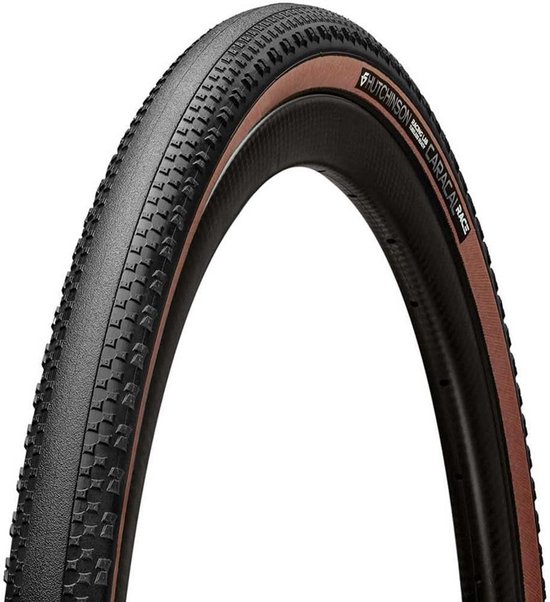
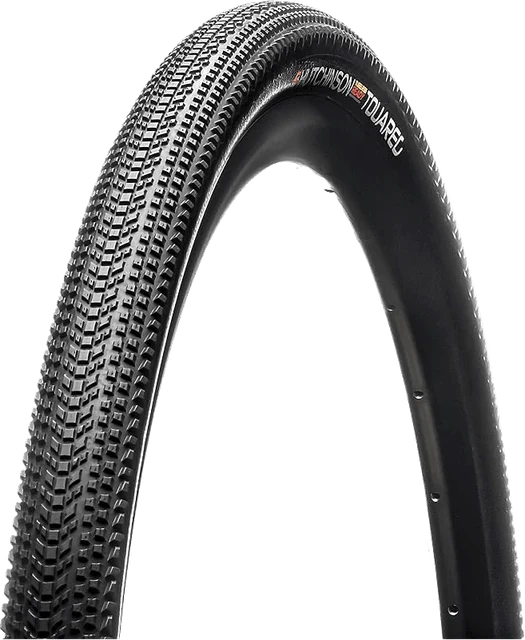
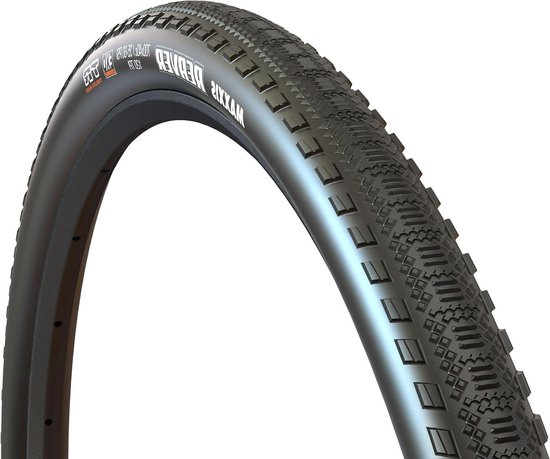
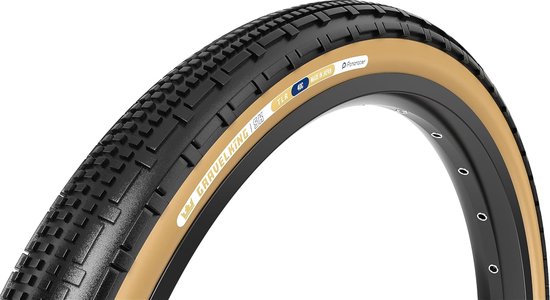
The tread makes the difference. A tyre with a closed centre strip and small knobs rolls fast on tarmac and hardpack. A tyre with open blocks and larger shoulder knobs bites better in sand, mud and loose corners, but hums on tarmac and rolls slower. What you choose depends on the mix of paved and unpaved in your rides.
Almost all gravel tyres are designed to run tubeless. With sealant and a pressure of roughly 1.5 to 2.5 bar (depending on width, your weight and the terrain), you get grip and comfort, and thorn punctures often seal themselves. Heavier tyres with reinforced sidewalls resist sharp stones better, but cost weight.
If a wider tyre fits your frame, it is often the best upgrade for a gravel bike. Measure the clearance at the chainstays and the fork before you choose.
Gravel tyre width and pressure
Starting values for tubeless at a rider weight of about 75 kg. Adjust for weight, rim width and surface.
| Width | Suits | Pressure (approx.) | Rolling speed | Grip and comfort |
|---|---|---|---|---|
| 35 to 38 mm | Mostly paved, hardpack | 2.3 to 3 bar | Fast | Decent |
| 40 to 42 mm | All-round gravel | 1.8 to 2.5 bar | Good | Good |
| 45 to 47 mm | Technical gravel, bikepacking | 1.5 to 2.2 bar | Average | Very good |
| 50 mm and wider | Rough terrain, heavy loads | 1.2 to 2 bar | Slower | Maximum |
Check how much room your frame has first. Beyond its maximum width the tyre will rub on the frame or fork.
Choose it if
- You need a single tyre to replace a worn gravel tyre
- You want to run tubeless at a comfortable width
- You ride gravel, forest tracks and farm roads as well as tarmac.
- You want more comfort and grip than your road tyres give.
Choose something else if
- You want a pair: check whether the pack holds only one tyre
- You ride almost only on tarmac: a road tyre is lighter and faster.
- You tackle technical climbs and descents over roots and rocks: an MTB tyre grips more.
How to choose and use gravel tyres
Measure your clearance
Check the maximum your frame and fork allow. A tyre’s real width often differs from its label, so leave at least 4 mm of clearance.
Pick the tread
Lots of tarmac and hardpack suits a fast-rolling tread. For sand and mud, choose open knobs.
Fit and seat tubeless
Fit the tyre on a tubeless-ready rim, add sealant and inflate hard until the beads pop into place. A compressor or tubeless booster helps with a stubborn tyre.
Start with low pressure
Ride a first loop and drop 0.1 to 0.2 bar at a time until it feels comfortable without bottoming out on the rim.
Adjust for the surface
On loose ground you can run lower; on hard, sharp stone go slightly higher to protect the rim.
Good to know
- You need sealant and tubeless-compatible rims
- Check frame and fork clearance for 40 mm
- Sealant dries out after a few months. Check it and top it up regularly.
- Too low a pressure causes rim strikes and can make the tyre burp off the rim in corners.
- Check that rim and tyre are truly tubeless-ready and follow the same standard.
- An aggressive tread adds rolling resistance on tarmac. You may swap tyres by season.
Also in this category
- Hutchinson Touareg Tubetype gravelband1 shop · Amazon.com.be€17.95
- Hutchinson Override gravelband tubetype1 shop · Amazon.nl€22.46
- Gravelbanden 700 x 40C tubeless ready1 shop · bol€162.53
- Hutchinson Override gravelband tubetype1 shop · Amazon.nl€26.49
- Hutchinson Touareg Tubeless Ready gravelband, dubbel compound1 shop · Amazon.com.be€28.99
- Gravelband 700 x 40C tubeless ready1 shop · bol€118.93