Degreasers
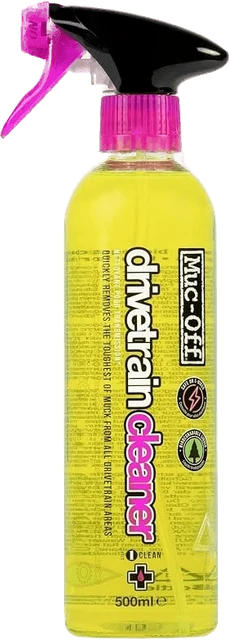
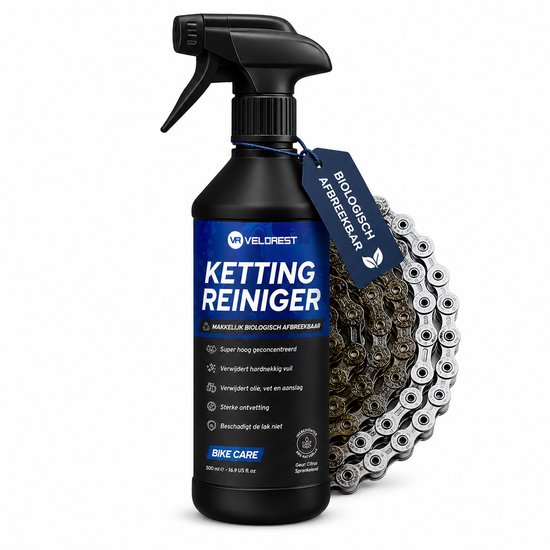
Kettingreiniger 250 ml
A 250 ml chain cleaner, described as a drivetrain grease solvent.
What you get
- 250 ml
- Chain degreaser
- Drivetrain grease solvent
Why a degreaser?
Oil and dirt combine into a black paste that clings between the links and the teeth. That paste grinds, makes shifting worse and speeds up wear. A cloth removes the outside, but a degreaser also dissolves what sits between the pins and rollers.
A well-degreased drivetrain is also the base for a fresh layer of lubricant. New oil on a dirty chain attracts dirt immediately. Wax sticks poorly to a chain that still has oil on it, so anyone switching to wax needs to degrease first.
There are several kinds. Solvents are strong and fast. Citrus and biodegradable products are gentler on you and on the environment. Water-based (alkaline) cleaners suit anyone working indoors or using a lot. Aerosol sprays are handy for separate parts such as the cassette. The strongest is not always the best: choose what fits your materials and your workspace.
For the chain itself there are chain cleaners, small boxes of brushes that the chain runs through. Degreasing is faster and tidier with one. For a heavy clean, take the chain off and soak it in a jar.
Types of degreaser compared
Each type strikes its own balance between strength, safety and convenience. Strength also depends on the brand.
| Type | Strength on grease | Rinsing | Safety and environment | Suits |
|---|---|---|---|---|
| Solvent | Strong, fast | Evaporates or wipe off, follow the pack | Ventilate, gloves, flammable | Heavily soiled drivetrain |
| Citrus or biodegradable | Moderate to strong | Usually with water | Gentler on skin and environment | Regular upkeep |
| Water-based (alkaline) | Moderate to strong | Rinse with water | Not flammable, wear gloves | Indoor work, larger quantities |
| Spray can | Strong on separate parts | Often rinse with water | Avoid breathing the mist, ventilate | Cassette, chainrings, a quick job |
A general guide. Products differ, so read the instructions and safety information on the pack.
Choose it if
- You want to clean chain and cassette before lubing
- You want a small bottle for home
- Your chain and cassette are covered in a black layer of oil and dirt.
- You want to switch to wax or another type of lube.
Choose something else if
- You need a large quantity for many bikes
- You want a full kit with brushes
- Your drivetrain is only lightly dirty. A cloth and a drop of lube are usually enough.
- You have no safe place to work or to collect the waste liquid.
How to use a degreaser
Protect the bike and yourself
Work somewhere well ventilated or outside, wearing gloves. Cover discs, pads and rims with a cloth.
Apply the degreaser
Spray or pour the degreaser on the chain, cassette and chainrings. Use a chain cleaner for the chain if you have one.
Let it work and brush
Wait for the time in the instructions, usually a few minutes, and scrub between the teeth and links with a brush.
Rinse or wipe off
Follow the pack: some products rinse off with water, others wipe off dry. Make sure no dirty residue stays behind.
Dry and re-lube
Dry everything thoroughly, including the inside of the chain. Re-lube straight away, since a degreased chain has no protection left.
Good to know
- Rinse and dry the drivetrain before applying fresh lube
- Read the instructions for materials such as carbon
- Keep degreasers away from brake discs and pads. Residue spoils braking, and contaminated pads usually need replacing.
- Do not spray into bearings, hubs or suspension. Degreasers wash out the grease that belongs there.
- Test on paint, plastic and carbon if the product touches the frame. Some solvents attack them.
- Do not pour used degreaser down the sink. Take it to a recycling centre or collect it in a tray.
Also in this category
- WD-40 Specialist Bike ontvetter 500 ml1 shop · Amazon.nl€13.99
- BBB Cycling Bio DriveTrain Cleaner kettingreiniger1 shop · bol€16.95
- Muc-Off 295 fietsreiniger 500 ml1 shop · Amazon.com.be€24.07
- Motul MTB-kettingreiniger spray1 shop · Amazon.com.be€14.53
- Velorest kettingreiniger 500 ml1 shop · bol€15.90
- Bio-Chem kettingreiniger 1 liter1 shop · Amazon.nl€19.99