Car bike racks
Allen Sports fietsendrager
This Allen Sports bike carrier is black and, according to the shop, one size for adults. The title does not say whether it mounts on the tow bar, roof or boot.
What you get
- Allen Sports bike carrier
- Black
- One size
Why a car bike rack?
A bike inside the car takes up a lot of space and brings in dirt. A rack keeps your interior free and lets you drive to the start of a ride, a race or a holiday without fuss. You can also take several bikes, which a small car cannot manage.
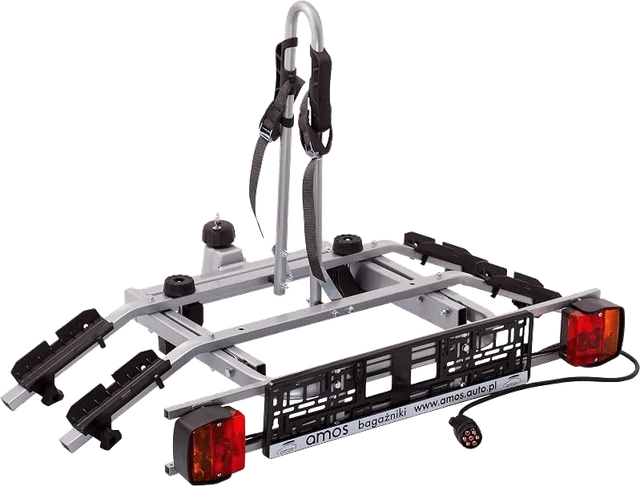
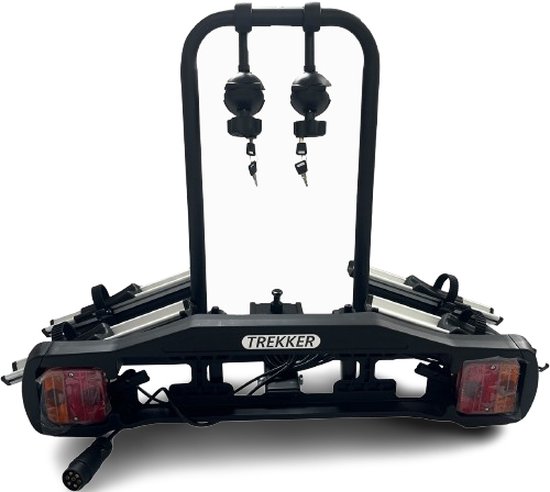
A tow-bar rack is the easiest. You lift the bike to about knee height, so you do not wrestle heavy bikes overhead. Many models carry two to four bikes and tilt away to open the boot. You need a tow bar, and its nose weight limit, often around 50 to 100 kg, caps the total load.
A roof rack needs roof bars and is very flexible. The bike sits on top of the car, so the boot stays free, but lifting is harder and the extra height matters for garages and car parks. The maximum roof load is usually between about 50 and 100 kg, racks included.
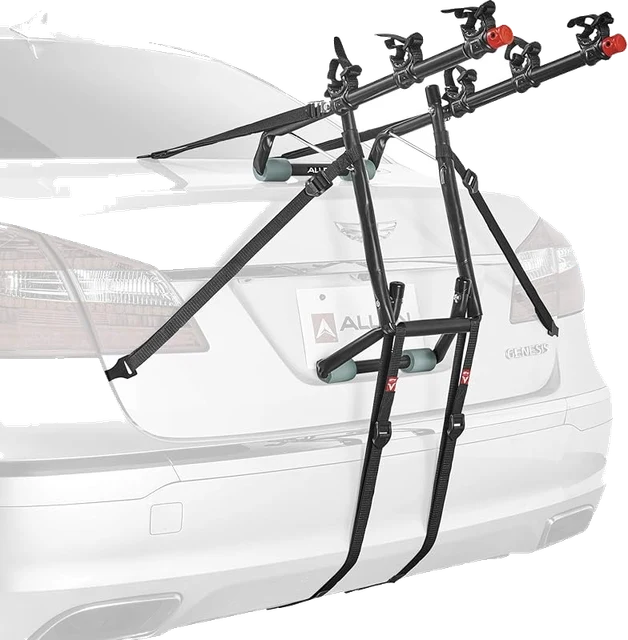
A tailgate rack is usually the most affordable to buy, because it uses straps and hooks and needs no tow bar. It is also the least stable and can damage the tailgate and paint. In Belgium the number plate and lights must stay visible. Some racks need an extra plate or light board.
The types of car bike rack
Each system has strengths and weaknesses. Here they are side by side.
| System | Bikes carried | Loading | Watch for |
|---|---|---|---|
| Tow bar | Usually 2 to 4 | Easy, at knee height | Nose weight, plate and lights |
| Roof | Usually 1 to 4 | Harder, overhead lift | Height, wind and fuel use |
| Tailgate | Usually 2 to 3 | Medium, with straps | Less stable, can mark paint |
Always check the maximum load in your car manual and the rack manual.
Choose it if
- You want an Allen Sports carrier and your car suits the system described on the product page
- You take your bike on trips fairly often
- You regularly drive to the start of a ride or a race and do not want the bike inside the car.
- You want to carry several bikes, for example with family or friends.
Choose something else if
- You do not yet know which type of carrier fits your car: start with that question
- You only transport your bike now and then. A folding bike or a boot with a bike cover is sometimes enough.
- Your car cannot take a tow bar or roof bars. Check the manual.
How to use a car bike rack
Check the limits
Look in the manual for the maximum nose weight of the tow bar or the roof load. Add up the weight of the rack and all the bikes.
Mount the rack
Place the rack on the tow bar, roof or tailgate and tighten all clamps and bolts. Tug the rack to feel for any play.
Load the bikes
Put the heaviest bike closest to the car. Take off loose items such as bottles, pump and bike computer and clamp the frame or wheels firmly.
Security and visibility
Make sure the number plate and lights stay visible and that bikes do not rub on each other or on the car. Use the rack lock to deter theft.
Drive steadily
Drive slower than usual, take bends wide and check after a few kilometres that everything is still tight.
Good to know
- The mounting type and number of bikes are not in the title, so read the product page
- Check that it is allowed on your car and that the number plate stays visible
- Allow for the total height of car and bikes with a roof rack. Think of car parks, tunnels and your own garage.
- Your rear view and parking sensors can be blocked. Bear that in mind when reversing.
- Wet salt or dirt wears clamps and hinges. Rinse the rack and lubricate moving parts after a winter trip.
- Check the legal rules on projecting loads and on number plates and lights. Non-compliant transport can mean fines and insurance trouble.
Also in this category
- Allen Sports Ultra Compact fietsendrager voor 1 fiets2 shops · Amazon.nl, Amazon.com.befrom €62.29
- Amos fietsendrager voor trekhaak, 2 fietsen1 shop · Amazon.com.be€100.99
- Trekker R200 fietsendrager voor 2 fietsen1 shop · bol€229.00
- Eufab Poker-F fietsendrager1 shop · Amazon.nl€249.00
- Eufab Premium II fietsendrager voor trekhaak2 shops · Amazon.nl, Amazon.com.befrom €330.98
- Tesla Fullback 3 fietsendrager voor kofferbak1 shop · bol€424.00