MTB wheels
Carbon MTB-wielset met steekas
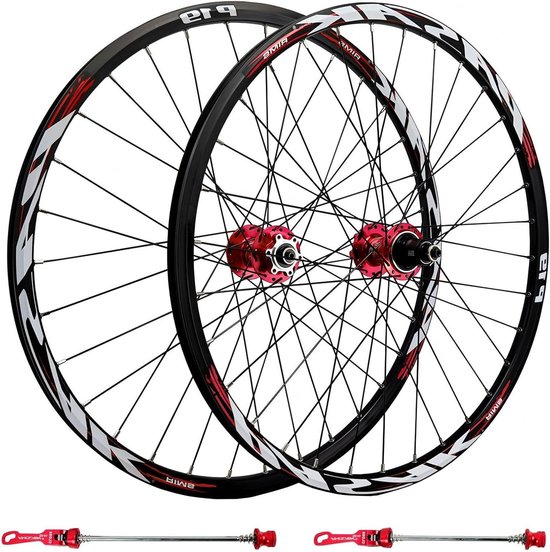
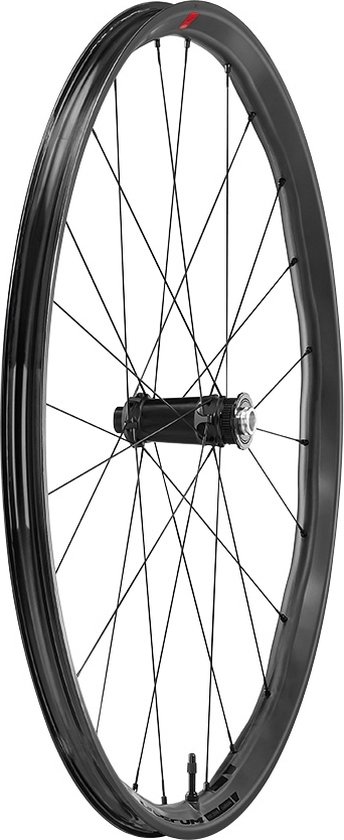
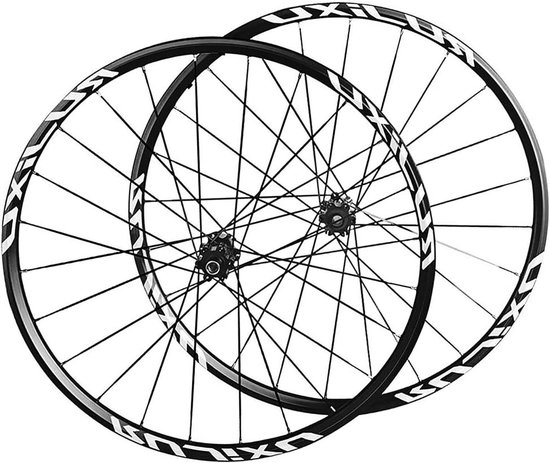
A carbon MTB wheelset for disc brakes and thru-axles. Carbon is the pick for riders who want to save weight on a mountain bike.
What you get
- MTB wheelset
- Carbon
- Disc brake
- Thru-axle
Why the right MTB wheels?
Rim width decides how your tyre behaves. Modern trail rims are 25 to 35 mm wide inside and support the sidewall of a wide tyre. That gives more cornering grip and less chance of the tyre folding at low pressure.
Strength and weight go together. A light XC wheelset usually weighs 1,500 to 1,700 g and suits racing and quick rides. Trail and enduro wheels weigh 1,800 to 2,200 g or more, with sturdier spokes and thicker rim walls. Heavier riders and e-bikes benefit most from a reinforced set.
Wheel size is a choice with consequences. 29 inch rolls over obstacles more easily and carries speed. 27.5 inch is more agile and stiffer, and suits smaller frames. Some bikes run 29 at the front and 27.5 at the rear. Look at what your frame allows.
Hub standards matter: Boost (110 front, 148 rear) is the common standard, with thru-axles and freehubs such as Shimano HG, Micro Spline or SRAM XD. A hub with quick engagement and reliable bearings shows on steep climbs.
MTB rim depth and strength
On MTB strength and width matter; aero plays little part. Here is what each class means for you.
| Class | Weight (set) | Internal width | Comfort and grip | Strength |
|---|---|---|---|---|
| Cross-country | Usually 1,500 to 1,700 g | 25 to 30 mm | Fast and direct | Light-duty |
| Trail | Usually 1,800 to 2,000 g | 30 to 32 mm | Good balance | All-round |
| Enduro and e-bike | Usually 2,000 to 2,400 g | 30 to 35 mm | Strong tyre support | High, against rim strikes |
Weights are indicative and depend on size and material.
Choose it if
- Your mountain bike has thru-axles and disc brakes and you want to ride lighter
- You want a carbon upgrade for an existing MTB
- You ride mountain bikes and want a stronger or lighter wheelset.
- You want a wider tyre with more support at low pressure.
Choose something else if
- You ride mostly rough terrain and want robustness, where aluminium is usually more forgiving of impacts
- You mostly ride gravel or road: choose a wheel for that use.
- Your bike has a different size or hub standard: check that first.
How to choose MTB wheels
Pick the size
Check what your frame and fork allow: 29 inch, 27.5 inch or a mix.
Check the hub standard
Usually Boost 110 front and 148 rear with a thru-axle. Choose the right freehub for your cassette.
Choose strength and width
Use the table: XC for speed, trail for all-round, enduro for big hits and e-bikes.
Fit the rotor
Check whether the hub is Centerlock or 6-bolt and fit the rotor to the right torque.
Set up tubeless
Apply tape, fit valve and tyre and inflate with sealant. Then ride at low pressure.
Good to know
- Wheel size and axle spacing (for example 15x110 or 12x148) are not in the title
- Mind the freehub body, which has to suit your cassette
- Respect the maximum load for rider and luggage.
- Spokes need re-tensioning after the first few rides.
- Check the freehub suits your cassette.
- Have the hub bearings checked regularly, especially after muddy rides.
Also in this category
- MTB-voorwiel 26/27,5/29 inch met schijfrem1 shop · Amazon.com.be€95.99
- MTB-wielset 29 inch aluminiumlegering, 7 tot 12 speed1 shop · Amazon.nl€140.00
- MTB-wielset tubeless ready1 shop · bol€380.80
- MTB-wielset 29 inch aluminium met schijfrem1 shop · Amazon.com.be€99.00
- MTB-wielset 26/27,5/29 inch schijfrem, set A1 shop · Amazon.nl€147.61
- Fulcrum Red Zone Carbon 29 Boost MTB-wielset1 shop · bol€1,243.86