Cycling backpacks
Flintronic fietsrugzak 8 liter
The Flintronic is a light, breathable 8 litre cycling backpack for short to mid-length rides. The listing mentions breathable material and a waterproof build.
What you get
- 8 litre capacity
- Lightweight, breathable build
- Waterproof according to the listing
Why a cycling backpack?
An ordinary school backpack swings about and pulls on your shoulders as soon as you lean forward. A cycling backpack has shorter, wider straps, a chest strap and often a hip belt that holds it against your body. It moves with you.
You sweat more across your back on a bike than when walking, because you are bent over and the pack blocks airflow. That is why many models have a back panel with channels or an air gap. It helps, but your back never stays fully dry, especially in summer.
The right size depends on what you do. For a ride of a few hours, roughly 2 to 10 litres is enough, often with a water bladder of about 1.5 to 3 litres. A day on the mountain bike needs roughly 10 to 20 litres for clothes, tools and food. For commuting with a laptop and a change of clothes you quickly reach 20 to 30 litres.
A backpack is not always the best choice. Heavy loads, such as a long trip or daily shopping, do better in panniers on a rack, because then the bike carries the weight. A backpack suits people who carry little and want to head out quickly.
The types of cycling backpack
Volume usually decides what a backpack is for. Here are the common types.
| Type | Volume | Used for | Drawback |
|---|---|---|---|
| Hydration pack | About 2 to 10 L plus 1.5 to 3 L water | Rides of a few hours | Bladder needs cleaning and drying |
| Day pack for MTB | About 10 to 20 L | Day trip with clothes and tools | Hot back on long climbs |
| Commuter pack | About 20 to 30 L | Laptop, clothes, lunch | Heavy on shoulders and back |
| Minimal vest or hip pack | About 1 to 5 L | Short rides, bottles and snacks | Little room for extra clothes |
Volumes are rough guides and differ between brands.
Choose it if
- You carry just the essentials: pump, tube, jacket and food.
- You want a small pack that stays out of the way on your back.
- You ride for a few hours or a full day and carry little.
- You want water close at hand without taking a bottle from the frame.
Choose something else if
- For a full day out with lots of water and clothing, pick a bigger pack.
- You ride long distances daily with a lot of luggage. Panniers on a rack spare your back.
- You have back or shoulder problems. Then you are better off not carrying weight.
How to use a cycling backpack
Adjust the shoulder straps
Tighten the shoulder straps until the pack sits against your back without pinching your shoulders. The bottom rests around your lower back.
Close chest and hip straps
The chest strap keeps the shoulder straps in place. The hip belt takes load off your shoulders and keeps the pack still while you ride.
Pack sensibly
Put the heaviest items close to your back at shoulder height. Keep snacks and a rain jacket on top so you can reach them without stopping.
Fill the bladder
Fill the bladder, press out the air and slide it into the sleeve against your back. Route the tube over your shoulder so you can reach the bite valve with one hand.
Clean after use
Rinse the bladder after each ride and hang it open to dry. That keeps it free of mould and taste.
Good to know
- Check whether a rain cover or hydration bladder is included, the listing does not say.
- Keep the weight reasonable. More than roughly 5 to 8 kg on your back soon gets tiring, especially on long rides.
- Pick a pack with reflective strips or a mount for a rear light if you ride at dusk.
- Check that the pack does not reach above your helmet or saddle. A pack that is too tall bumps your helmet when you look over your shoulder.
- Dry the pack after a wet ride. A rain cover is handy, but it does not replace dry bags for your electronics.
Also in this category
- Ultralichte MTB-rugzak1 shop · Amazon.nl€17.99
- Fietstas voor bagagedrager 22 liter1 shop · Amazon.com.be€23.28
- Vebics fietsrugzak voor laptop1 shop · bol€57.00
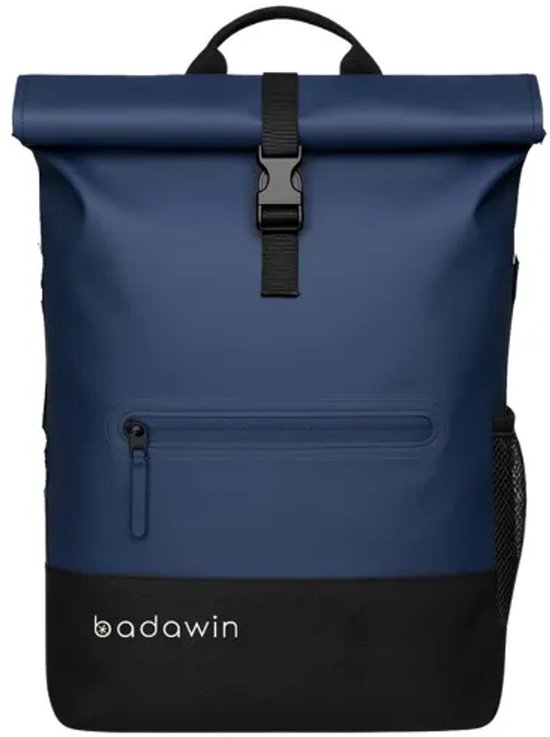
- Badawin Anna 2-in-1 fietsrugzak 27 liter1 shop · bol€79.95
- Dutch Mountains fietsrugzak 28 liter1 shop · bol€34.95
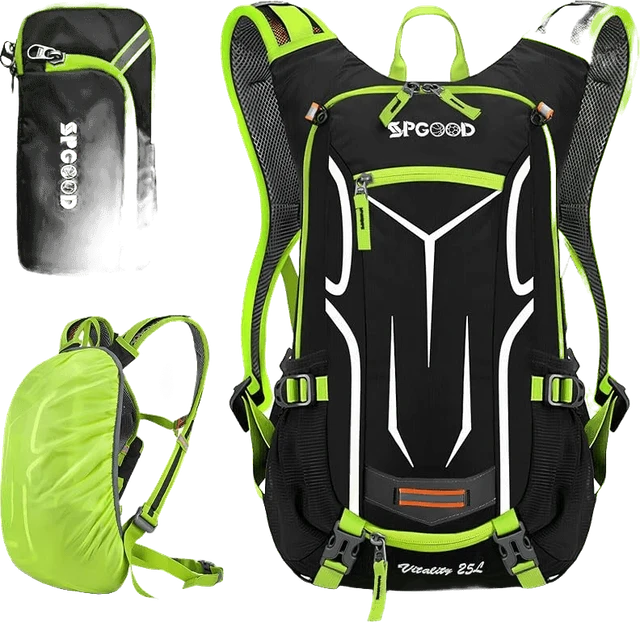
- SPGOOD fietsrugzak voor MTB1 shop · Amazon.com.be€48.19