Turbo trainers
Opvouwbare fietstrainer indoor
A second listing of the foldable indoor trainer, with the same cut-off shop title. It is a basic stand with no brand name.
What you get
- Foldable model
- Indoor trainer
- Exercise trainer
Why a turbo trainer?
Training indoors is efficient. You ride exactly the effort you want, without traffic, junctions or descents. An hour on the trainer is often similar to an hour and a half outside, because you never coast. That makes it ideal for intervals and winter training.
There are three main types. With direct drive you remove the rear wheel and put the chain straight onto the trainer. It is quiet, accurate and solid. With wheel-on, the wheel stays in the bike and a roller presses against your rear tyre: more affordable and more compact, but louder and slightly less accurate. Rollers are free-standing drums you balance on: you train balance and smoothness, but resistance is lower.
Good direct drive trainers are typically accurate to about plus or minus 1 percent, wheel-on trainers 2 to 5 percent, and simple rollers usually measure nothing. For power-based training that difference matters.
A trainer needs a few extras: a mat, a fan (you sweat far more than outdoors) and, for wheel-on, perhaps a special trainer tyre. With the right setup you will use it often and regularly.
Direct drive, wheel-on or rollers
The three systems differ a lot in noise, accuracy and price level.
| System | Noise | Accuracy | Price level | Suits |
|---|---|---|---|---|
| Direct drive | Quiet, usually 55 to 65 dB | Very good, about 1 percent | High | Lots of indoor riding, online racing |
| Wheel-on | Louder, 65 to 75 dB | Fair, 2 to 5 percent | Mid | Getting started, occasional use |
| Rollers | Medium, own roller noise | Usually no measurement | Low to mid | Pedal smoothness, warming up |
Noise and accuracy are indicative and vary by model and setup.
Choose it if
- You want simple indoor training with your own bike
- You want to put it away after use
- You want to train well in winter or bad weather.
- You train with power or follow structured intervals.
Choose something else if
- You want detailed data or virtual rides
- You want a quiet trainer
- You mainly enjoy riding outdoors: indoors it can feel dull.
- You live in an apartment with thin floors: watch noise and vibration.
How to use a turbo trainer
Set it up
Put the trainer on a mat on a level surface and set it level. Place a fan nearby.
Mount your bike
With direct drive you take off the rear wheel and fit the cassette on the trainer. With wheel-on you clamp the bike by the quick release and adjust the roller.
Connect your trainer
Connect to your app via Bluetooth or ANT+. Run a calibration for a reliable reading.
Warm up
Ride easily for 10 to 15 minutes before your session. Have plenty to drink.
Wipe down afterwards
Wipe sweat off bike and trainer, because it corrodes the frame, bars and parts.
Good to know
- Compare with the other page for the same trainer
- Check wheel size and axle
- Check that the trainer fits your axle standard (12 mm thru-axle, quick release) and your freehub.
- Wheel-on trainers wear your rear tyre quickly. Use a dedicated trainer tyre.
- Sweat damages your bike. Use a towel and a protective cover.
- Keep firmware and calibration up to date to stay accurate.
Also in this category
- Sportana fietstrainer met magneet1 shop · bol€63.99
- ThinkRider X2 Max smart trainer1 shop · Amazon.nl€299.00
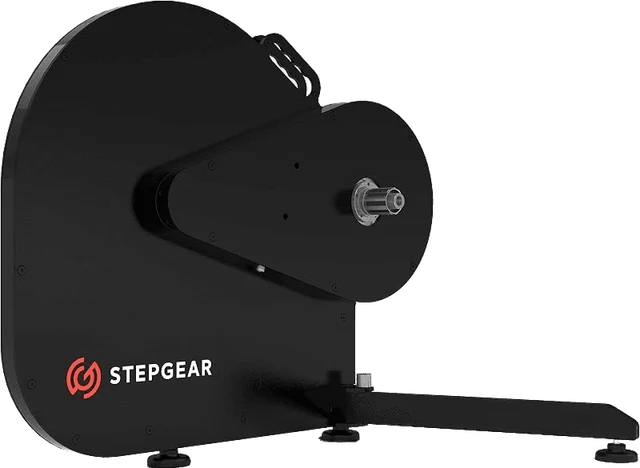
- SG-1 Direct Drive Smart trainer1 shop · Amazon.com.be€1,153.72
- Hometrainer met 6 versnellingen1 shop · bol€84.99
- CXWXC Direct Drive Smart trainer1 shop · Amazon.nl€405.00
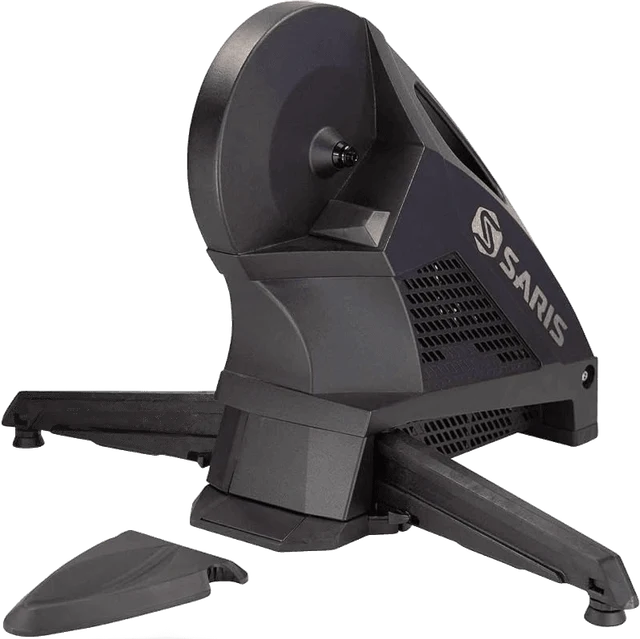
- Saris H3 Direct Drive Smart trainer (Amazon.com.be)1 shop · Amazon.com.be€725.98