Bells
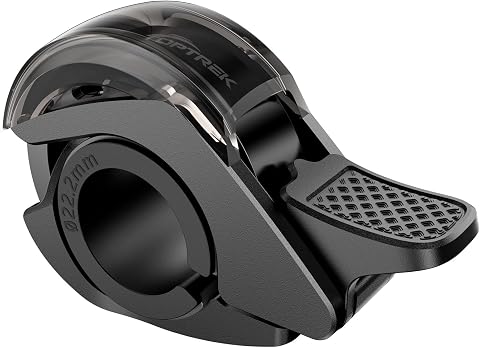
Toptrek fietsbel 110 dB
The toptrek is a bike bell with a sound up to 110 dB, meant for mountain and road bikes. It is a small bell you mount on the handlebar.
What you get
- Toptrek bike bell
- Up to 110 dB
- For MTB and road bikes
Why a good bell?
A bell is the simplest safety item on your bike. You announce yourself before passing someone, on a cycle path or a narrow towpath, without shouting. Nobody is startled and others can move over in time.
The sound is measured in decibels (dB). An ordinary bike bell usually reaches about 70 to 90 dB, and loud models get up to about 100 dB. You can hear the difference: more dB carries further and cuts through background noise. A bell that is too quiet is only heard by someone close by.
Belgian law requires a bell that can be heard from far enough away. The law names no fixed dB figure. Choose a bell with a clear, piercing tone and test it outdoors against traffic noise. A pretty bell with a weak sound is an ornament, not a warning.
A small bell weighs little and takes little space, so it fits on a sporty bike too. Many racers leave it at home, but if you ride in a group or on a busy cycle route, a bell makes you feel safer and more courteous.
The types of bike bell
The three types differ in sound, operation and fitting.
| Type | Sound | Operation | Watch for |
|---|---|---|---|
| Ring bell | Clear, about 70 to 90 dB | Thumb flick, small and light | Must fit the bar diameter |
| Dome bell | Full, up to about 90 dB | Hammer or clapper, classic | Heavier and larger |
| Electronic bell | Loud, about 90 to 100 dB | Button, battery or rechargeable | Battery must work, rain |
Loudness differs per model and is measured at a given distance.
Choose it if
- You want to warn walkers and riders clearly on a path
- You want a compact bell for a sporty handlebar
- You ride busy cycle paths, towpaths or in town and want to be heard.
- You want to meet the obligation that a bike has a bell.
Choose something else if
- You want a bell that meets legal requirements for city riding, so check the rules in your country
- You ride mostly on a track or circuit with no pedestrians. A bell is of little use there.
- You want an electronic bell but ride without a charger or spare battery. It stays silent when the battery is flat.
How to use a bike bell
Measure your handlebar
Most bars are around 22.2 mm (flat bar) or 31.8 mm (oversized). Check the diameter before you buy, because the clamp has to fit.
Choose a spot
Place the bell within reach of your thumb, next to the grip or brake lever. That way you ring without letting go of the bar.
Mount and tighten
Slide the clamp onto the bar and tighten the screw with a hex key. The bell should no longer turn, but do not overtighten on a carbon bar.
Test the sound
Ring a few times and ask someone to listen from a few metres away. With an electronic bell, check the battery as well.
Ring early and politely
Ring while you are still some distance from the person, and slow down. A short ding is often enough to get their attention.
Good to know
- Check the handlebar diameter the mount fits
- Place it within thumb reach
- A bell with a dull sound may change because of dirt, rain or a loose part. Clean it and check the tone regularly.
- A bell must not sit where it hinders steering or braking. After fitting, check that everything stays clear.
- Electronic bells have batteries that run flat. Test them regularly, especially before a long ride.
- On a carbon bar be careful with clamps. Use the recommended tightening torque and, if needed, a rubber shim.
Also in this category
- Dresco racefietsbel2 shops · Amazon.nl, Amazon.com.befrom €3.99
- Fietsbel voor jongens en meisjes, uitvoering 21 shop · Amazon.com.be€5.67
- Knaak Classic fietsbel1 shop · bol€5.95
- M-Wave Bella Trill fietsbel1 shop · Amazon.nl€2.90
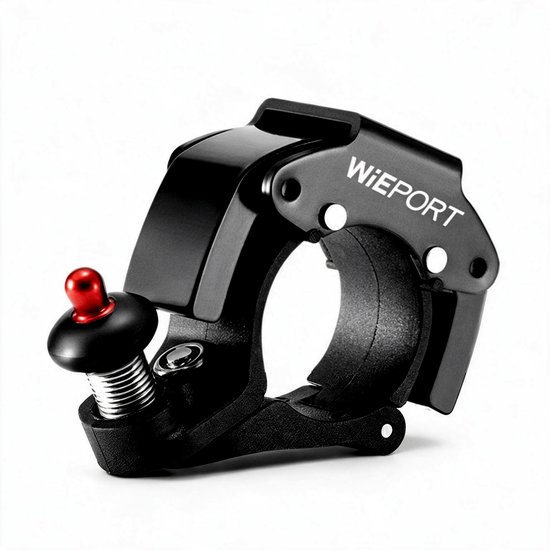
- Wieport compacte fietsbel1 shop · bol€15.95
- Büchel Flexibell fietsbel1 shop · Amazon.nl€5.99