Bottle cages
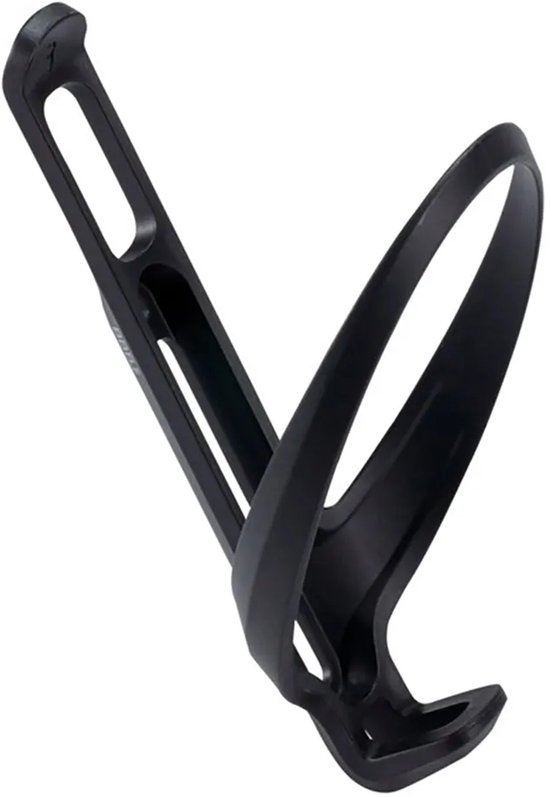
Zefal Pulse L2 bidonhouders carbon (set van 2)
The Zefal Pulse L2 Pack has two ultralight carbon bottle cages at 18 g each per the listing. A set for carrying two bottles on a road bike.
What you get
- 2 bottle cages
- Carbon
- 18 g each per the listing
Why a good bottle cage?
Drinking while you ride keeps you fresh for longer. A fluid deficit of just two percent of your body weight can noticeably lower your performance. A cage that lets the bottle go in and out easily makes the difference between drinking every twenty minutes and drinking only once you are already thirsty.
The cage has to hold the bottle on rough ground and still release it smoothly when you pull. A standard bottle is about 74 mm in diameter, and most cages are made for it. A cage that is too loose drops the bottle on cobbles or gravel. One that is too tight makes the bottle hard to pull out, especially with gloves on.
The cage bolts on with two M5 bolts to the mounting points on the frame, normally 64 mm apart. Many modern frames have several pairs: inside the main triangle, under the down tube and sometimes on the fork or top tube. That lets you carry two to four bottles on long rides.
How the materials compare
The material sets the weight, the grip and how long the cage keeps its tension.
| Type | Weight | Bottle grip | Watch for |
|---|---|---|---|
| Plastic or nylon | Usually 25 to 50 g | Good and slightly flexible | Can crack or loosen over the years |
| Aluminium | Usually 40 to 60 g | Firm, needs a well-fitting bottle | Can open up with heavy use |
| Carbon | Usually 20 to 35 g | Firm and light | Hard material, can wear the bottle |
| Side entry (left or right) | Usually 30 to 60 g | Good, opens to the side | Handy on small frames |
Weights are rough figures and depend on the model.
Choose it if
- You count grams and want two light cages.
- You ride long distances and need two bottles.
- You want to drink on the move without using a backpack or jersey pockets.
- You ride long and want to carry two bottles.
Choose something else if
- On rough terrain such as MTB, stronger cages hold the bottle more firmly.
- Your frame has no mounting points. You would need a strap-on cage or a bag.
- You ride a thirty-minute spin, where a bottle in your pocket is enough.
How to use a bottle cage
Check the mounting points
Find the two mounting points on your frame. Thread a bolt in without the cage to check that the thread is clean.
Position the cage
Hold the cage on the frame with the opening facing up. On a small frame only a side-entry or low cage may fit.
Tighten the bolts
Tighten both bolts with a hex key until they are snug. That is usually around 4 Nm; on a carbon frame follow the manufacturer’s figure.
Test the bottle
Push the bottle in and pull it out a few times. It should come out smoothly, yet stay put when you shake the bike up and down.
Good to know
- Check that your frame has two bottle cage mounts.
- Carbon cages grip less tightly, so test one on a rough road.
- Check after the first ride that the bolts are still tight. Threadlocker can help if they keep coming loose.
- A cage that is too tight wears the bottle and makes drinking in a sprint awkward. One that is too loose drops the bottle: replace it when the spring is gone.
- Take care with bolts that are too long on carbon frames: they can touch the inside of the tube.
- Sand and mud in the cage act like sandpaper on the bottle. Rinse it clean now and then.
Also in this category
- Ultralichte carbon bidonhouders (set van 2, mat en glanzend)2 shops · Amazon.nl, Amazon.com.befrom €25.52
- Carbon bidonhouders (set van 2), flessenhouder2 shops · Amazon.nl, Amazon.com.befrom €33.90
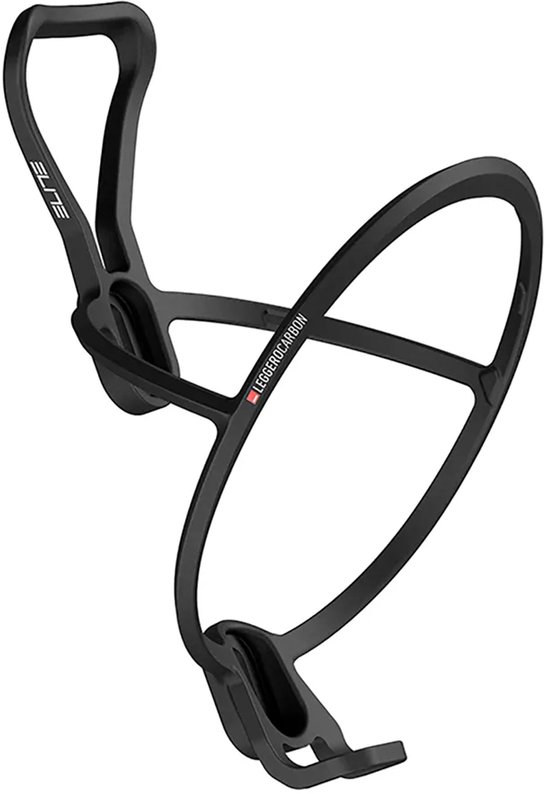
- Elite Leggero carbon bidonhouder zwart1 shop · bol€33.99
- Zefal Press L2 bidonhouder carbon2 shops · Amazon.nl, Amazon.com.befrom €10.99
- BBB Cycling HaloCage carbon bidonhouder1 shop · bol€20.30
- Full carbon fiber bidonhouders (set van 2, tweede uitvoering)2 shops · Amazon.nl, Amazon.com.befrom €25.02