MTB pedals
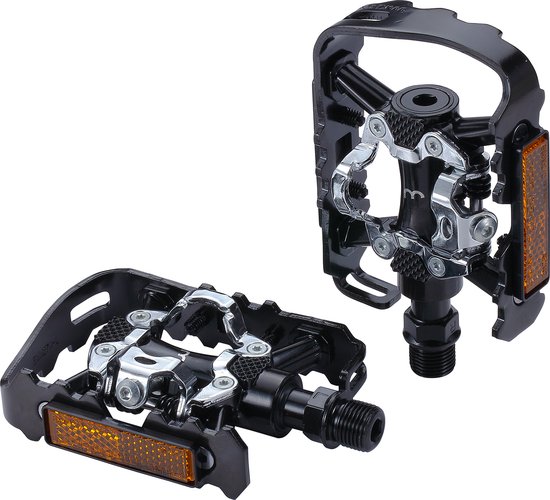
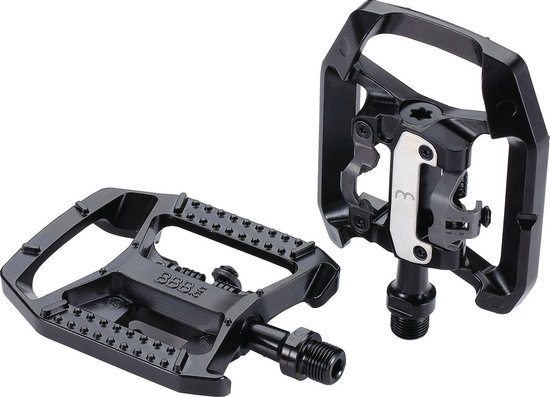
BBB Cycling DualChoice pedalen (SPD en plat)
The BBB Cycling DualChoice is a two-sided MTB pedal: one side takes SPD cleats, the other is a flat platform with grip. You decide per ride whether to use clip-in shoes or ordinary ones.
What you get
- Combination pedal for MTB
- SPD on one side, flat on the other
- BBB Cycling brand, DualChoice model
Why MTB pedals?
Rough terrain asks for different pedals than tarmac. You need to be able to walk when it gets too steep or technical, unclip quickly to put a foot down and put up with dirt that would clog an ordinary pedal. MTB pedals are designed for that.
The classic choice is SPD, Shimano’s two-bolt system. The cleat is recessed into the sole and the pedal is open, so mud can escape. An SPD pedal allows about 4 degrees of float and you can set the release tension. There are also versions with a wide cage or platform for extra support, useful for trail and enduro.
Flat pedals without a clip are the alternative. Your feet sit on a broad platform with small pins that grip, and you get your foot off quickly. That forgives more mistakes, and many riders feel more confident on technical sections or when learning to jump. You lose the ability to pull on the pedal, and your foot can slip off if shoes or pedals are worn.
Combination pedals have a clip mechanism on one side and a flat surface on the other. Handy if you are undecided or sometimes want to ride in ordinary shoes.
How MTB pedals compare
The choice depends on how you ride and how confident you are in technical terrain.
| Type | Grip | Advantage | Drawback | Suits |
|---|---|---|---|---|
| XC clipless | Attached to the pedal, small platform | Light, efficient pedalling | Little support if unclipped | Cross-country, marathon |
| Clipless with platform | Attached, wide cage | Support even when unclipped | Heavier than XC | Trail, enduro |
| Flat pedal with pins | Pins bite into the sole | Foot off quickly, forgiving | No pulling on the pedal | Downhill, freeride, beginners |
| Combination pedal | Clip on one side, flat on the other | Flexible, also in ordinary shoes | You must find the right side | Touring and city riding |
A guide. Models within a type differ in weight and platform.
Choose it if
- You switch between clipped-in rides and short hops in everyday shoes
- You want to try SPD without giving up a flat pedal
- You ride mountain bike or gravel and want pedals that cope with mud.
- You want to walk in your shoes without a cleat sticking out.
Choose something else if
- You always ride SPD and prefer a pedal built purely for that
- You ride mostly on the road and want a stiff platform: choose road pedals.
- You worry about unclipping fast enough in technical terrain. Flat pedals give more peace of mind.
How to use MTB pedals
Fit the pedals
Right is a right-hand thread, left a left-hand thread. Grease the thread and tighten firmly.
Fit the cleats
Put the cleat under the ball of your foot and align it straight. A slight angle inward or outward is fine if your feet naturally sit that way.
Set the tension
Start at the lightest release tension. You can increase it as you gain confidence.
Practise on flat ground
Practise clipping in and out on grass or a quiet path. Try both left and right.
Unclip before you fall
Unclip early at a stop or a tricky section. Your foot should be free before the bike slips away.
Good to know
- You need SPD cleats if you want to clip in
- The two sides feel different underfoot, so give yourself time to get used to it
- Clean the mechanism after muddy rides. Rinse it and apply a light lubricant now and then.
- Cleats wear and eventually clip in stiffly or release unexpectedly. Replace them in good time.
- Flat pedals: the pins wear and can damage shoes and shins. Wear sturdy shoes and shin protection.
- Check the pedal bearings: play or a grinding noise points to wear.
Also in this category
- Gewage SPD-pedalen met 3 afgedichte lagers2 shops · Amazon.nl, Amazon.com.befrom €31.44
- BBB Cycling aluminium SPD-pedalen1 shop · bol€52.78
- Klikpedalen voor Shimano SPD-SL mountainbike1 shop · Amazon.nl€21.99
- Shimano combipedalen SPD en platform2 shops · Amazon.nl, Amazon.com.befrom €48.75
- LPZMPZ pedalen voor Shimano SPD1 shop · Amazon.com.be€27.70
- Gewage SPD-pedalen met 3 afgedichte lagers1 shop · Amazon.nl€31.44