Chews and gummies
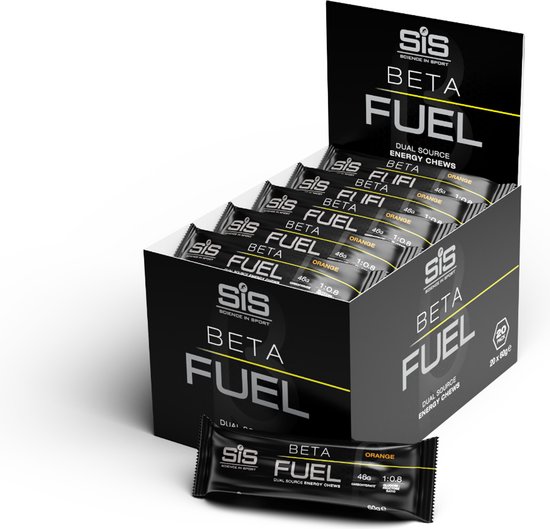
Science in Sport BETA Fuel Chews sinaasappel (20 x 60 g)
The SIS Beta Fuel Chews are orange-flavoured energy chews in a box of twenty 60 g pouches. You chew them during exercise.
What you get
- 20 pouches of 60 g
- Orange flavour
- Energy chews by Science in Sport
Why chews or gummies?
A gel goes in all at once and a bar has to be broken up. Chews and gummies sit in between: you take one or two pieces at a time, so you can have a small portion every 10 to 15 minutes. A steady supply is often kinder to your stomach than big doses in one go.
A portion usually holds around 20 to 30 g of carbohydrate, spread over a few pieces. Check the pack for how many pieces that is and how many grams of carbohydrate each one contains. For 30 to 60 g an hour, that means roughly one or two portions an hour. On rides of three hours or more it can be higher, using a glucose and fructose mix.
Water with them is usually optional, although a few swallows help your stomach. Some chews contain sodium (salt) or caffeine. It is listed on the pack, often as about 25 to 50 mg of caffeine per portion.
If you like to chew, chews are pleasant. The drawbacks are sticky sugar on your teeth and pieces that harden in the cold. On a steep climb or at very high intensity, chewing and breathing at once can be awkward.
Types of chews and gummies compared
All variants deliver fast carbohydrate. They differ in texture and in what else is added.
| Type | Carbs per portion | Texture | Suits | Watch for |
|---|---|---|---|---|
| Soft gummies | Usually 20 to 30 g | Soft, easy to chew | Flat or moderate pace | Stick together in warm weather |
| Firm chews | Usually 20 to 30 g | Chewy, takes longer | Easy rides, small bites | Harder in the cold |
| Chews with sodium | About 20 to 30 g, plus salt | Slightly salty finish | Hot, long rides | Sodium content varies widely by model |
| Caffeine chews | 20 to 30 g, plus roughly 25 to 50 mg caffeine | Same as ordinary chews | The last hours of a long ride | Count other caffeine |
A general guide. Brands and formulas differ, so read the packaging.
Choose it if
- You want chews instead of gels on long rides
- You want orange flavour and a box with many pouches
- You prefer to eat in small, regular portions.
- You like to chew and find gels too runny.
Choose something else if
- You dislike chewing while riding; a gel or a drink suits better
- You ride at very high intensity and struggle to chew and breathe at once.
- You have crowns or sensitive teeth and dislike sticky sweets.
How to use chews or gummies
Work out your portion
Check the pack for the carbohydrate per piece. That tells you how many pieces you need per hour to reach 30 to 60 g.
Start after half an hour
Eat the first piece after about 30 minutes. After that, have one or two pieces every 10 to 15 minutes.
Chew well
Chew calmly and swallow before the next bite. On a climb or at a hard pace, a gel is the better pick.
Drink now and then
Take a few swallows of water after each portion. It rinses sugar off your teeth and helps your stomach.
Store them well
Keep the pouch closed and out of the sun. In summer gummies melt together and in winter they harden. An inside pocket helps in both cases.
Good to know
- Try them in training first
- Carbohydrate content is not in the title, so check the packaging
- A portion on the pack is not always the whole pouch. Read how many pieces it holds and how much carbohydrate each has.
- Some chews contain gelatine, caffeine or allergens such as soy. Read the label.
- Sticky sweets stay on your teeth. Drink water and brush your teeth after a long ride.
- These are general guidelines for recreational riders. For personal nutrition advice, or with a medical condition, ask a doctor or sports dietitian.
Also available as
The same product line with a different size or version, compared on price per unit.
| Version | From | Price per 100 g |
|---|---|---|
| Orange, 20 x 60 g You are viewing this one | €14.96 | €1.25Best value per 100 g |
| Lemon, 20 x 60 g | €45.16 | €3.76 |
Also in this category
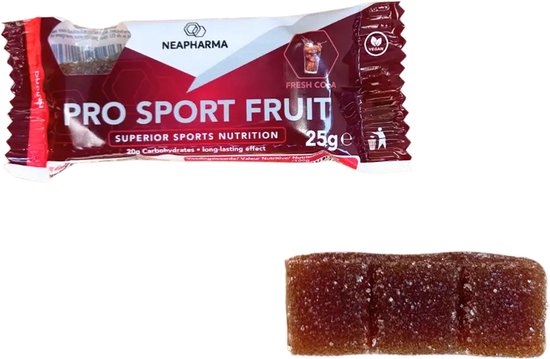
- Neapharma Pro Sport energy chews framboos1 shop · bol€14.96
- Science in Sport BETA Fuel Chews citroen (20 x 60 g)1 shop · Amazon.nl€45.16
- Neapharma Pro Sport energy chews cola1 shop · bol€15.34
- GU Energy Chews variety pack (12 zakjes)2 shops · Amazon.nl, Amazon.com.befrom €84.82
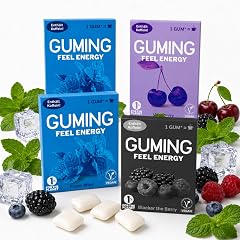
- Guming energiekauwgom met cafeïne (40 stuks)1 shop · Amazon.nl€9.99